Ontario Boating License: Take The Course And Get Your PCOC Online
In Ontario, anyone operating a motorized boat is legally required to carry a Pleasure Craft Operator Card (PCOC), commonly called an Ontario boating license. The National Boating Safety School is a Transport Canada-approved provider: you study online, pass the official exam and print your temporary card the same day. No driver's license and no prior boating experience are required.
- Transport Canada-approved course, exam and card, valid for life across Canada
- $69.95 one-time fee and group rates, with no renewal and no annual charges
- Unlimited exam retries at no additional cost
- Free boat handling course included, a $30 value offered by no other provider
- Listed on the officiallist of accredited course providers
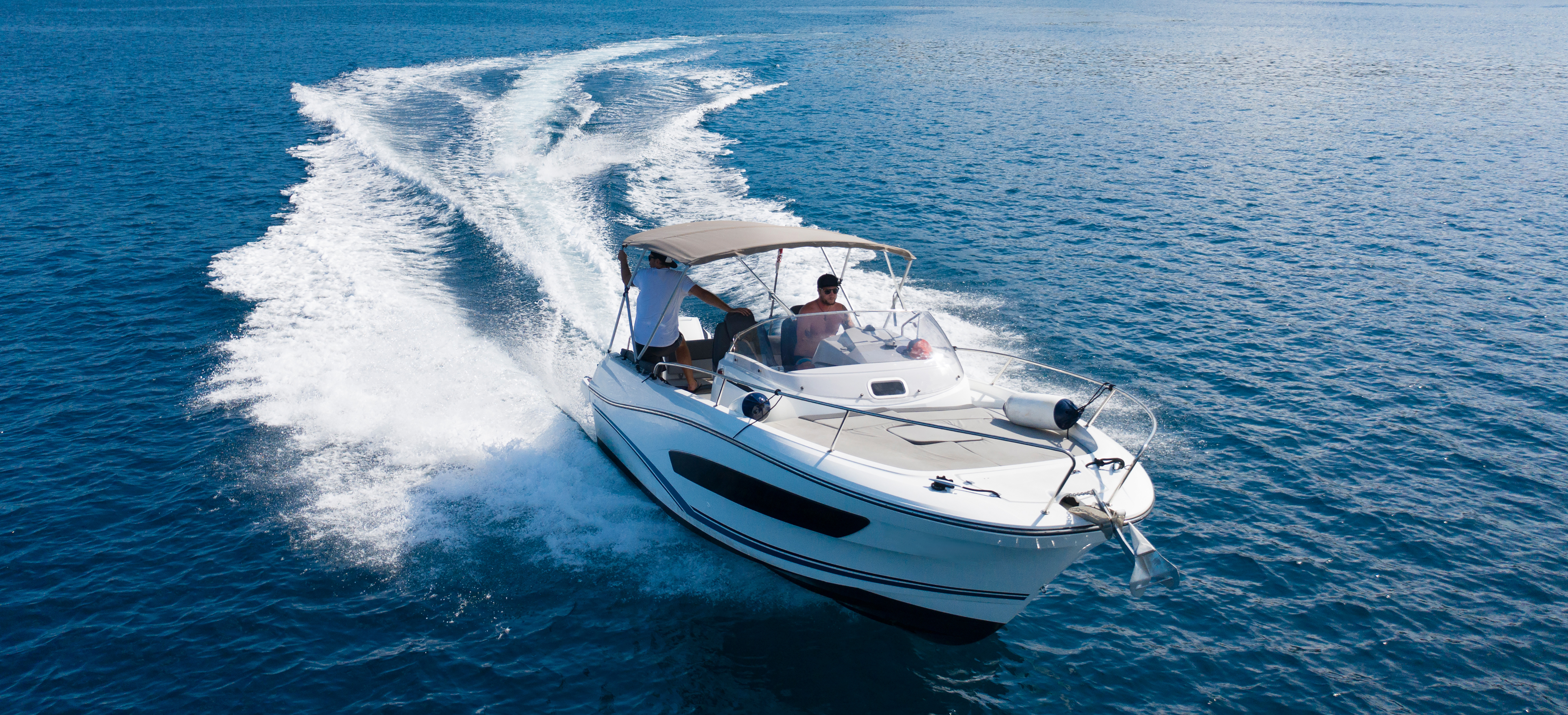
How to get your Ontario boating license in 3 steps
Getting your Ontario boating license takes about three to five hours from start to finish. The entire process happens online, at your own pace, on any device. Here is what each step involves.
Step 1
Study the online boating courseThe NBSS course covers everything the official exam tests, using interactive videos and chapter quizzes rather than a static manual. Your progress is saved automatically, so you can stop after one chapter and pick up days later. Most students complete the material in a single afternoon. |
Step 2
Pass the Transport Canada examThe online boating exam consists of 50 multiple-choice questions and is open book. You need 75 percent to pass, which means 38 correct answers. Retries are free and unlimited, so a first attempt that falls short costs you nothing. |
Step 3
Print your temporary card and receive your PCOCAs soon as you pass, you can print a temporary Ontario boating license and head out on the water legally. Your permanent Pleasure Craft Operator Card is then mailed to your Ontario address. The card never expires and requires no renewal. |
How much does an Ontario boating license cost : Individual and Group Rates
An Ontario boating license costs $69.95 with NBSS, paid once, with no recurring fees. Group rates apply automatically when several people register together, which is common for families and cottage co-owners.
1 person $69.95 per license ✓ Transport Canada-approved ✓ Unlimited exam retries ✓ 24/7 online access ✓ Instant digital temporary card Start the Course Most popular 2 people $64.95 per license Save $5 per license ✓ Transport Canada-approved ✓ Unlimited exam retries ✓ 24/7 online access ✓ Instant digital temporary card Start the Course 3 people $59.95 per license Save $10 per license ✓ Transport Canada-approved ✓ Unlimited exam retries ✓ 24/7 online access ✓ Instant digital temporary card Start the Course Best value 4+ people $54.95 per license Save $15 per license ✓ Transport Canada-approved ✓ Unlimited exam retries ✓ 24/7 online access ✓ Instant digital temporary card Start the Course
What's included in your Ontario boating license with NBSS?
Every NBSS registration includes more than the exam itself. Below is exactly what the $69.95 covers, with no optional add-ons at checkout.
- Complete online course with videos and quizzes, accessible for life
- Official Transport Canada exam, taken online whenever you are ready
- Unlimited retries, so a failed attempt never costs extra
- Temporary license printable immediately after you pass
- Permanent PCOC shipped to your address, valid for life and across Canada
- Boat handling course included free, a $30 value if purchased separately
That last point deserves emphasis. Passing the exam proves you know the rules of navigation, but it does not teach you to dock in a crosswind or set an anchor properly. The complementary boat handling course fills that gap, and no other Transport Canada-approved provider currently bundles it at no charge.
What the Ontario boating course covers?
The NBSS course follows the competency standard set by Transport Canada under the Competency of Operators of Pleasure Craft Regulations. Six areas are covered, and all six appear on the exam.
- Canadian boating laws and regulations, including the rules specific to Ontario waterways
- Required safety equipment by vessel type and length
- Navigation, buoys, markers and right-of-way rules
- Boat operation, docking, anchoring and towing
- Emergency procedures, including cold water immersion and man overboard response
- Environmental responsibility and wake management
Each chapter ends with a quiz so you can confirm you have retained the material before moving on. The full boating safety manual remains available for reference after certification.
Is a boating license mandatory in Ontario?
Yes. Operating a motorized pleasure craft in Ontario without proof of competency carries a minimum fine of $250, and the requirement applies regardless of your age, the size of the boat or the power of the engine.
The rule exists for a measurable reason. According to the Drowning Prevention Research Centre Canada, in a 2026 report funded by Transport Canada, Ontario records an average of 29 recreational boating deaths per year, the highest provincial total in the country. The provincial fatality rate rose 28 percent between 2012-2016 and 2017-2021, one of the largest increases nationally. Powerboats accounted for 52 percent of Canadian boating fatalities over the study period, and 78 percent of victims were not wearing a personal flotation device.
Those numbers describe preventable incidents. A boating safety course does not eliminate risk, but it addresses the knowledge gaps behind most of them.
Which boats require a PCOC in Ontario
A Pleasure Craft Operator Card is required for any vessel fitted with a motor, including small fishing boats with electric trolling motors under 10 horsepower. Personal watercraft such as a Sea-Doo or jet ski fall under the same rule, with an additional minimum operating age of 16. A sailboat equipped with an auxiliary motor also requires proof of competency, even when running under sail alone.
Which boats do not require a PCOC
No boating license is required for unpowered vessels: canoes, kayaks, paddleboards, rowboats and sailboats with no motor fitted. The distinction rests on whether a motor is installed, not on whether it is running. A canoe with a small outboard mounted on the transom requires a PCOC even if the motor stays off.
Who needs an Ontario boating license?
Anyone who operates a motorized pleasure craft in Ontario needs proof of competency, whatever their age, experience or place of residence. The rule follows the person at the helm, not the owner of the boat.
- Operators of every age, including children, with horsepower limits applying under 16
- Guests and friends who take the helm, even for a few minutes, on someone else's boat
- Boat owners who let others operate their vessel, since the operator must carry their own proof
Passengers do not need a card. Neither do renters, provided they complete a rental boat safety checklist with the rental company. And a valid Ontario driver's license does not count as proof of competency: the two documents are unrelated.
Get your Ontario Boating License today with NBSS
You can be certified before the end of the day. Register, work through the course at your own pace, pass the exam and print your temporary Ontario boating license immediately. Your permanent PCOC follows in the mail, and it never expires.
Lost or damaged PCOC: get a replacement card
If your Pleasure Craft Operator Card is lost, damaged or stolen, you do not need to retake the course or the exam. NBSS issues a replacement Pleasure Craft Operator Card for $24.95 for one card, $29.95 for two and $34.95 for three under the same name, plus taxes and shipping.
FAQ about Ontario boating license
What is a Pleasure Craft Operator Card (PCOC)?The Pleasure Craft Operator Card is the official proof of competency required to operate a motorized pleasure craft in Canada, and it is what Ontario boaters commonly call a boating license. It is a wallet-sized card issued by a course provider accredited by Transport Canada, once you have passed the official boating safety test. The card confirms that you understand navigation rules, required safety equipment and emergency procedures. It is valid for life, cannot be suspended or revoked, and must be carried on board whenever you operate a motorized vessel. Photocopies are not accepted. |
||||||||||||||||||
Do boating licenses expire in Ontario?No. The Pleasure Craft Operator Card never expires and there is nothing to renew. You pay once, and the card remains valid for the rest of your life, in Ontario and everywhere else in Canada. There are no annual fees, no refresher course and no expiry date printed on the card. The only reason to contact a provider again is a lost or damaged card, or a change of name or address. |
||||||||||||||||||
Is an Ontario boating license the same as a boat registration?No. These are two separate documents covering two different things: one certifies the operator, the other identifies the vessel.
Most Ontario boat owners need both. |
||||||||||||||||||
How old do you have to be to get a boat license and drive a boat in Ontario?There is no minimum age to hold a PCOC, but engine power limits apply to young operators under the Vessel Operation Restriction Regulations.
The Pleasure Craft Operator Card is mandatory at every age. These power limits are additional to the card requirement, not a substitute for it. |
||||||||||||||||||
Why do I have to take a boating course to get my PCOC?The course exists because the card certifies competency, not attendance. It teaches what you need to meet the federal standard for operating a motorized boat in Canada: boating laws and regulations, navigation rules, the safety equipment required on board, and how to respond to an emergency on the water. Transport Canada mandates this sequence under the Competency of Operators of Pleasure Craft Regulations, with the stated aim of reducing accidents and promoting safe boating. Once you pass the test, your Pleasure Craft Operator Card is issued for life. |
||||||||||||||||||
What is the fine for operating a boat without a PCOC in Ontario?The minimum fine is $250. It applies to any motorized vessel, including a small boat with an electric trolling motor. Failing to produce your card to an enforcement officer on request is itself the offence, so the card must be carried on board. |
||||||||||||||||||
Do I need a boating license for a jet ski in Ontario?Yes, and it is the same card. Ontario has no separate certification for personal watercraft: the PCOC covers motorboats and jet skis alike. Operators of a personal watercraft must also be at least 16 years old, regardless of engine power. |
||||||||||||||||||
How long does it take to get an Ontario boating license?Between three and five hours for most students, covering both the course and the exam. Because the material is saved as you go, that time can be spread over several sessions. Your temporary license is available to print the moment you pass. |
||||||||||||||||||
Is the Ontario boating license hard?No, getting your Ontario boating license is as simple and stress-free as can be! The Boating Safety Test covering all course material must be taken and passed after you review all modules. This test consists of 50 questions. Passing the Transport Canada Boating Safety Test requires a score of at least 75%. You may retake the test after 24 hours if you don't pass the first time. |
||||||||||||||||||
Can I go boating as soon as I pass the test?Yes. Passing the exam earns you a temporary proof of competency that you can print immediately and use legally on Ontario waters. Your official Pleasure Craft Operator Card is then mailed to you. |
||||||||||||||||||
What happens if I fail the Ontario boating exam?You can retake it at no additional cost, with a 24-hour wait between attempts. The exam is open book and drawn entirely from the course material, so most students pass on the first attempt. |
||||||||||||||||||
Do I need a PCOC to rent a boat in Ontario?Not necessarily. Renters without a Pleasure Craft Operator Card must complete a rental boat safety checklist, cosigned with the rental operator and carried on board. That checklist is valid only for the duration of the rental, whereas a PCOC is valid for life. |
||||||||||||||||||
Is my Ontario PCOC valid in the United States?Yes. The Pleasure Craft Operator Card is recognized under a reciprocity arrangement with the National Association of State Boating Law Administrators and the United States Coast Guard, so it is accepted for recreational boating in American waters. |
||||||||||||||||||
Can I use my Ontario boating license anywhere in Canada?Yes. The Pleasure Craft Operator Card is issued under federal law, not provincial law, so the card you obtain in Ontario is valid in every province and territory. There is no separate card to buy if you trailer your boat to Quebec, take it to a lake in Manitoba or move to British Columbia. One nuance is worth knowing: the Competency of Operators of Pleasure Craft Regulations do not apply in the waters of the Northwest Territories and Nunavut, so proof of competency is not legally required there. Carrying your card remains recommended, and the safety knowledge behind it applies to any Canadian waterway. |