How to Clean the Bilge in 7 Step
Cleaning a boat's bilge is one of those gritty tasks that isn't particularly glamorous, but it is absolutely necessary. Why? Leaving a bilge dirty does more than just cause a foul odor. The sludge can easily clog your bilge pump, leading to a much more serious situation.
If you ever take on water, you need to know your bilge pump is doing its job to avoid capsizing. You also need to know you are not at risk of polluting the waterway due to oil and grease buildup (a punishable offense).
Keep reading to find out how to clean your bilge safely and effectively in 7 simple steps.
Key Takeaways
- Cleaning the bilge is not fun, but it’s necessary for safe and responsible boating
- The seven steps to getting it done right are: disconnect the power (if you have an electric bilge pump), prep and check for contaminants, clear out debris, apply degreaser and scrub, rinse and evacuate the sludge, inspect your bilge pump, and turn the pump battery back on.
Step One: Disconnect the Power (If You Have an Electric Bilge Pump)
Turn off the battery switch or pull the fuse for the bilge pump. You will be working around the float switch and the pump's impeller area, and you don't want the pump accidentally kicking on while your fingers or cleaning brushes are nearby.
Step Two: Prep and Check for Contaminants
Before adding any water or soap, look closely at the standing water. If you see an oily sheen or smell fuel, do not use your bilge pump.
According to Canadian boat pollution laws, pumping bilge that contains oil or fuel into waterways is illegal and subject to heavy fines. Use oil-absorbent pads to soak up the surface oil first, and be thorough.
Step Three: Clear Out Debris
Put on thick gloves and manually scoop out any solid debris like leaves, fish scales, loose zip ties, or hair clogs. Check the limber holes (the small drainage channels that let water flow between hull compartments) to make sure they are completely clear.
Step Four: Apply Degreaser and Scrub
Pour in a generous amount of biodegradable bilge cleaner or a heavy-duty marine degreaser mixed with warm water. Let it sit for 15 to 20 minutes to break down sludge. Then use a stiff-bristled scrub brush on long handles to scrub down the fiberglass walls, scrubbing extra hard on the waterline grime.
Step Five: Rinse and Evacuate the Sludge
Rinse the area with fresh water and remove the dirty water safely.
If the boat is on a trailer or dry dock, you can pull the garboard drain plug and catch the runoff in a bucket for proper disposal.
If the boat is in the water, you can use a portable wet/dry vacuum or a manual hand pump to extract the dirty water into buckets. Discard it safely at an onshore waste station.
Step Six: Inspect Your Bilge Pump
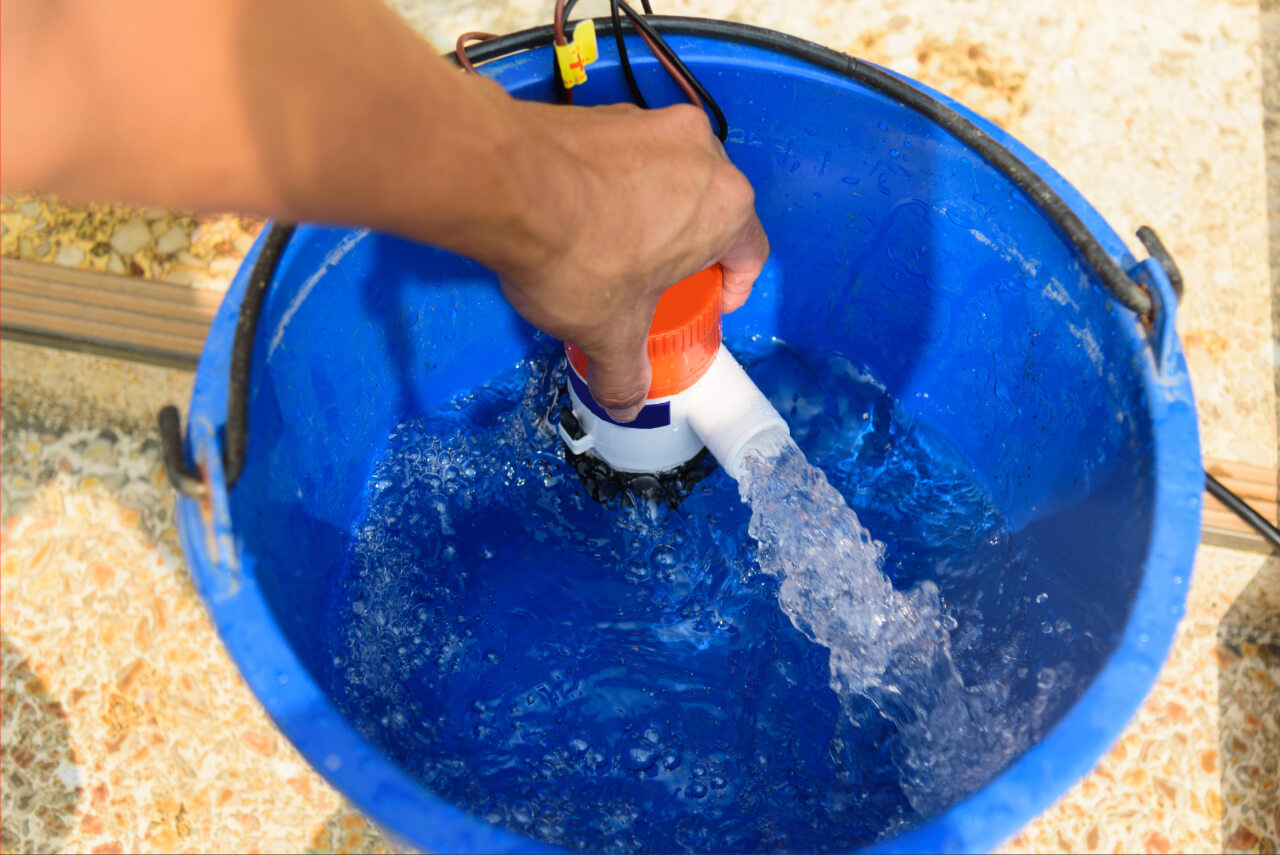
Now is a good time to give your electronic bilge pump a quick inspection. Pop the pump out of its mounting bracket (most have simple plastic tabs on the sides) to clean the internal strainer screen. Hair and fiberglass strands love to wrap around the impeller, which can burn out the motor.
Step Seven: Turn the Pump Battery Back On
Once everything is rinsed and dried, turn the battery switch back on and lift the float switch manually. Make sure everything is working properly.
Learn About Boating Equipment with the National Boating Safety School
Safe boating involves cleaning and taking care of your boat (including the hull) and of all the equipment on board, from life jackets to distress flares to reboarding devices. Even experienced boaters need to review the basics sometimes. Check out our Boat Maintenance Guide for details!
The Boating Safety School offers the Transport Canada-approved safe boating course 100% online so you can learn everything required to pass the official exam and get your Pleasure Craft Operator Card. It’s Canada’s nationwide proof of competency for boaters. Register today and learn everything you need to go boating safely and legally in every province.